Wednesday, 29.11.2023, 19:00, Audimax
Rainer Kresken (Space engineer, ESA/ESOC, Darmstadt)
Planetary Defense: How do you teach asteroids to keep their distance?
Keeping a distance of 1.5 meters at all times - this has been effective in recent years against the global threat of viruses and has saved lives. However, this distance is unlikely to be sufficient against the global threat of asteroid strikes. The lecture will present ideas on how a small planet defense could work so that we don't end up like the dinosaurs once did. Rainer Kresken is head of the Starkenburg Observatory in Heppenheim and a space engineer at the European Space Operations Center (ESOC) in Darmstadt. There, he searches for asteroids that could pose a threat to Earth for the European Space Agency ESA.
Further information is available at:
https://www.starkenburg-sternwarte.de/vorstand/
Wednesday, 15.11.2023, 19:00, Audimax
Dr. Christian Theis (Director and Managing Director of the Mannheim Planetarium)
The future of the universe
Astronomy usually looks into the past. In this lecture, however, we will look into the future of the universe on the basis of our current world view and the laws of nature as we know them. Accordingly, the lecture will begin with a summary of what has happened in the universe so far, followed by an outlook on future events in the near and distant future. The focus will be on the development of the Earth and the solar system as well as our galaxy, the Milky Way. We will then broaden our view and turn to the question of when the (stellar) light in the universe will go out, when and how the last stars in the cosmos will form and what will become of the galaxies. Finally, we will ask ourselves what will remain in this universe after eons.
Further information is available at:
https://www.planetarium-mannheim.de/
https://www.mannheim.de/de/presse/erfolgreiche-kontinuitaet-im-planetarium-mannheim-dr-christian-theis-setzt-vertrag-fort
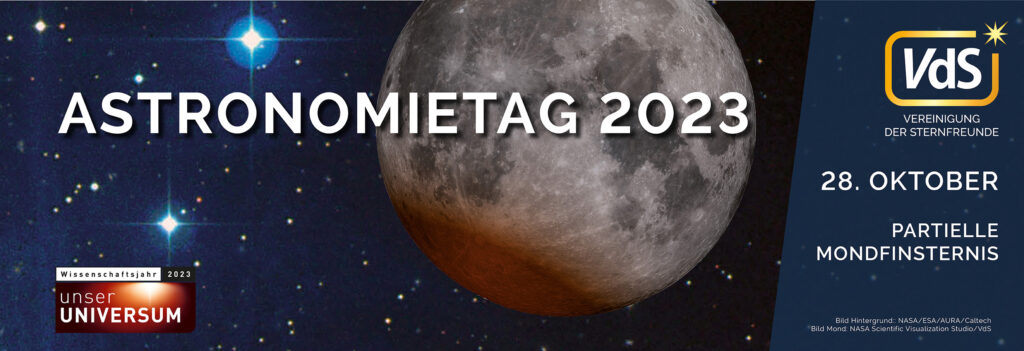
Astronomy Day and partial lunar eclipse on October 28, 2023
To mark this year's Day of Astronomy in Science Year 2023 and the partial lunar eclipse, the observatory will be open from 8 p.m., provided the night sky is clear.
Under expert guidance and explanation, you have the opportunity to observe the partial lunar eclipse through our telescope.
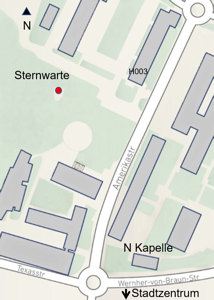
Regardless of the weather, the event takes place at 6 pm in the Lecture hall N101 in the chapel (first traffic circle on the campus coming from the city center, on the right hand side).
The speaker is Mr. Martin Bertges, head of the astronomy and geophysics working group at the Geoscope Prehistoric Museum at Lichtenberg Castle near Kusel.
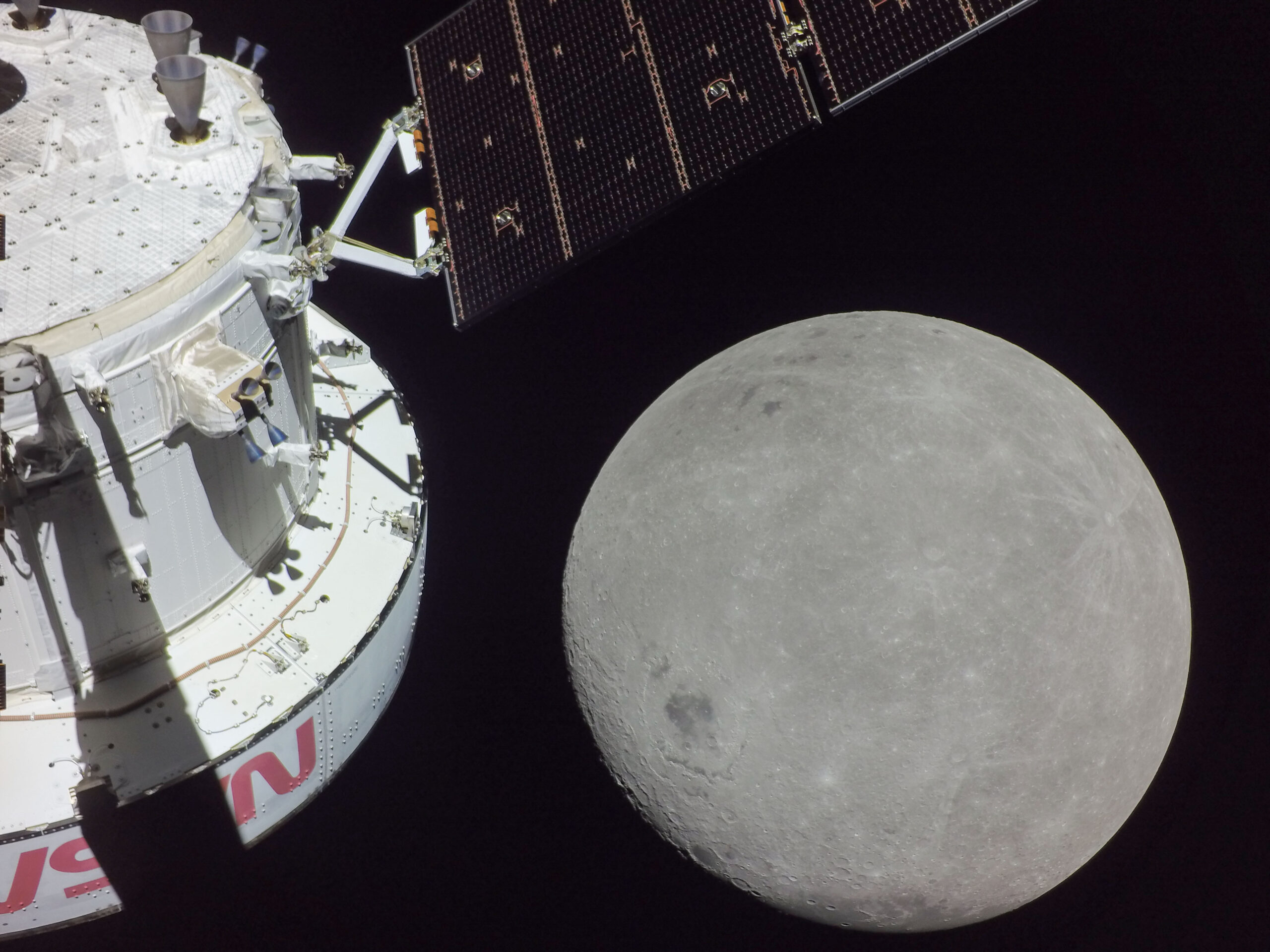
Topic: Next stop the moon - the new race? In the coming years, humans are to set foot on the moon again, a new space station is to be built for this purpose and can also be used for other missions. What will this look like and what benefits can it bring for people on Earth?
Admission is free, advance registration is not necessary.
The night of shooting stars - observing the Perseids on the night of August 12/13, 2023
It's that time again. This year's maximum of the Perseids will take place on the night of August 12-13. The highest rate of up to 100 shooting stars per hour is expected towards the morning of the 13th.
Provided the night sky is clear, we open our observatory from 9 pm. Under expert guidance and explanation, we offer a view through our telescope of the objects and the beauty of the summer night sky after dark.
Regardless of the weather, a lecture by Dr. Rolf-Dieter Schad, Zweibrücken Observatory, will take place at 8 pm in lecture hall N101 in the chapel (first traffic circle on campus coming from the city center, on the right). Topic: Our universe
Universe I - Our solar system, of course with consideration of the meteor streams, especially the Perseids.
For personal observation of the Perseids on the green areas around the observatory, we recommend a sleeping mat or blanket and appropriate clothing for the cooler nights. Binoculars are also recommended for a visual walk across the sky.
More information about the Perseids can be found in the sky forecast for the august.
Tour of Germany - RAMOTS visits the Zweibrücken Observatory
The youth group of the Astronomische Vereinigung Bodensee e.V., called "Bodenseesternwarte", has built Europe's largest mobile tracking system for moving celestial and terrestrial objects, called RAMOTS, with around 25 young people.
RAMOTS stands for "Realtime Automatic Moving Object Tracking System". This is a large telescope mounted on a trailer. The telescope can be controlled using a joystick and Arduino microcomputers. This makes it possible to take photos and video recordings of fast-moving objects.
The project was launched in the summer of 2020 in a race to see who could take a good photo of the International Space Station (ISS) first. The solar-powered telescope system can also be used to photograph sailing boats, airplanes, light aircraft, ski racers and much more.
On 22.05.2023 from 4 pm, four members of the "Bodensee-Sternwarte" will demonstrate RAMOTS to the group at the NAWI Observatory Zweibrücken, Amerikastraße 1 (assuming good weather).
In the evening at 8 p.m., the lecture by
Markus Kohler, Bodenseesternwarte
RAMOTS - Hunting satellites with a joystick and telescope
in lecture hall H003 opposite the observatory.
The screening and lecture are open to the public.
The Astronomische Vereinigung Bodensee e.V. (Lake Constance Astronomical Association) was founded in 1996 on the initiative of astronomy enthusiasts whose aim was to educate the public about astronomy. The non-profit association, which is now based in Friedrichshafen, operates a mobile observatory where, depending on the weather, the public can also observe the sky through the association's telescopes.
Further information:
Participation of the observatory in Open Campus 2023
The Zweibrücken Observatory will be taking part in the Zweibrücken Campus Open Day on 22.04.2023.
We open our observatory from 10:00 to 15:00 and offer our visitors an insight into the world of astronomy. We not only explain how our telescopes work, but also the technology behind them. In addition, our guests have the opportunity to observe the sun in a safe and expert manner.
The following lectures are offered in room H003 (entrance directly at the small parking lot below the observatory):
14:00 Lecture Dr. Walter Arnold
Topic: What can be observed with the all-sky camera at Zweibrücken Observatory?
With the all-sky cameras, an international network of cameras operated by amateur observatories and whose images are publicly accessible, it is possible to observe the burning up of meteroids as meteors ("shooting stars") in the Earth's atmosphere. The lecturer will explain how to access the images from the cameras via the Internet, discuss the origin of the meteroids, their composition and their physical characteristics.
14:30 Lecture Dr. Rolf-Dieter Schad
Topic: Solar observation - carried out as safely as possible
The lecture briefly explains the processes on the sun and shows various methods of observation. Possible dangers are discussed, as the speaker is an ophthalmologist. Some solar eclipses and transits observed by Zweibrücken itself will be presented.